Three centuries · Two continents
A legacy
shaped by fire.
From the volcanic vineyards of Central Europe to the mountain soils of Napa Valley, Hertelendy is a living continuation of land, patience, and devotion to craft.
Chapter I · Before Napa
Where the lineage began.
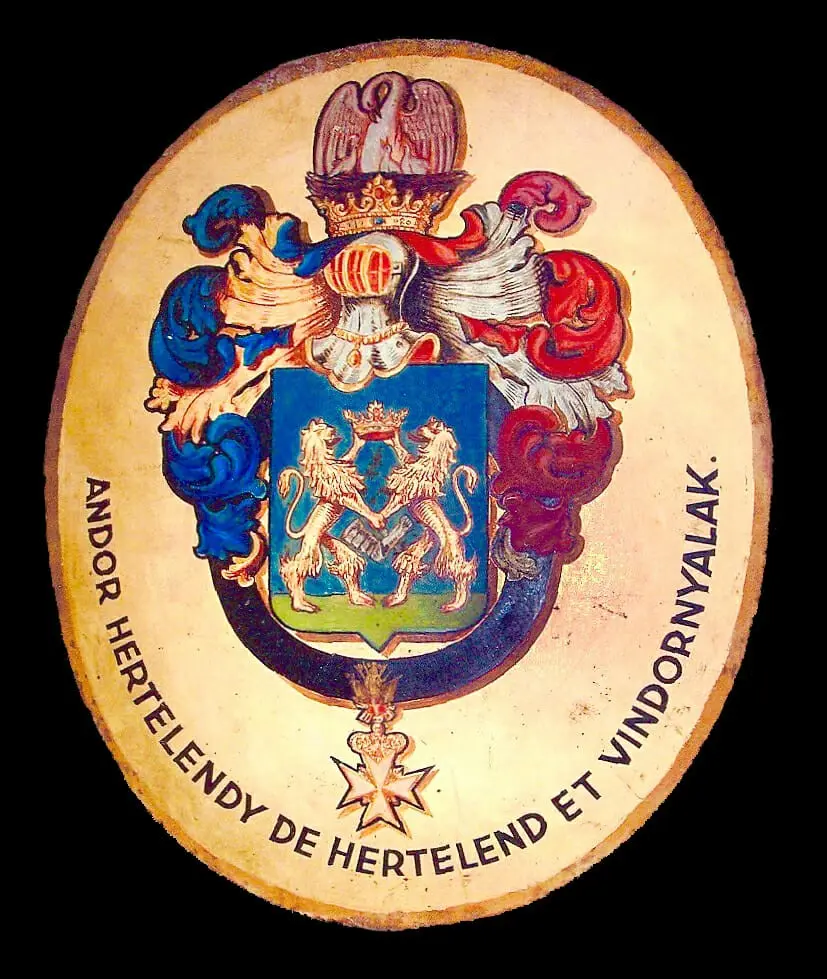
The Hertelendy family cultivated Grüner Veltliner and Welschriesling near Budatin Castle as early as the 18th century. Borders changed, sovereignties shifted, yet the family’s devotion to wine endured.
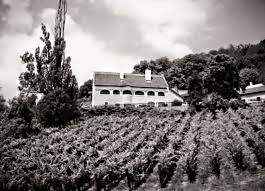
That devotion found its most remarkable expression in Gábor Hertelendy, whose vines took root on the basalt slopes above Lake Balaton.
The elemental thread
“It’s not a coincidence. It’s in our blood.”Volcanic soil across generations
Chapter II · What Endured
Rarity was never a deterrent.
Gábor cultivated Szürkebarát and the nearly extinct Kéknyelű — an indigenous grape requiring both male and female vines, twice the land, and extraordinary patience.
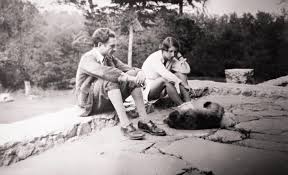
Even after Communist confiscation, he remained as a hired hand on his former estate, quietly preserving the knowledge that might otherwise have disappeared.
One foundation · Two worlds
Ancient fire, carried forward.
Badacsony
Basalt mountains rising above Lake Balaton, where rare white varieties drew their character from soils born of an extinct volcano.
Napa Valley
Mountain vineyards and complex volcanic formations where the same elemental philosophy now finds a distinctly Californian expression.
From the family archive
The story in motion.
Egészségedre
Hertelendy wines are not simply produced —
they are carried forward.
Discover the Napa Valley expression of a winemaking tradition centuries in the making.